Understand campaigns and triggers
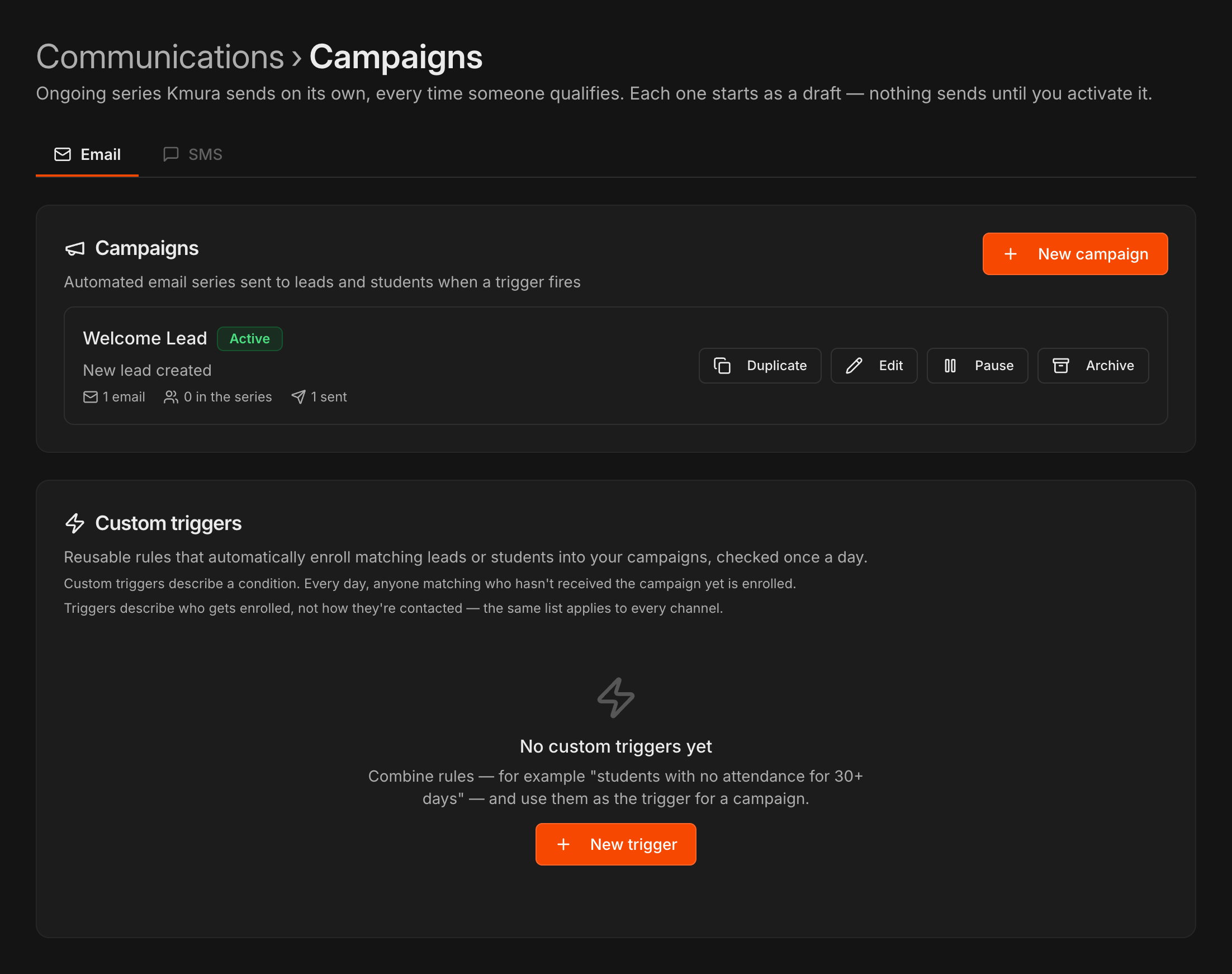
Go to Communications and open Campaigns. Use the Email or SMS tab to choose the channel you are building for.
A campaign is an ongoing series: every time someone qualifies, Kmura enrolls them and sends the messages on the schedule you set. It starts as a Draft and sends nothing until you activate it.
The page has two cards: Campaigns (your series) and Custom triggers (reusable rules that decide who gets enrolled).
Note
Triggers describe who gets enrolled, not how they are contacted. The same trigger can power an email campaign and an SMS campaign.
Pick a built-in trigger
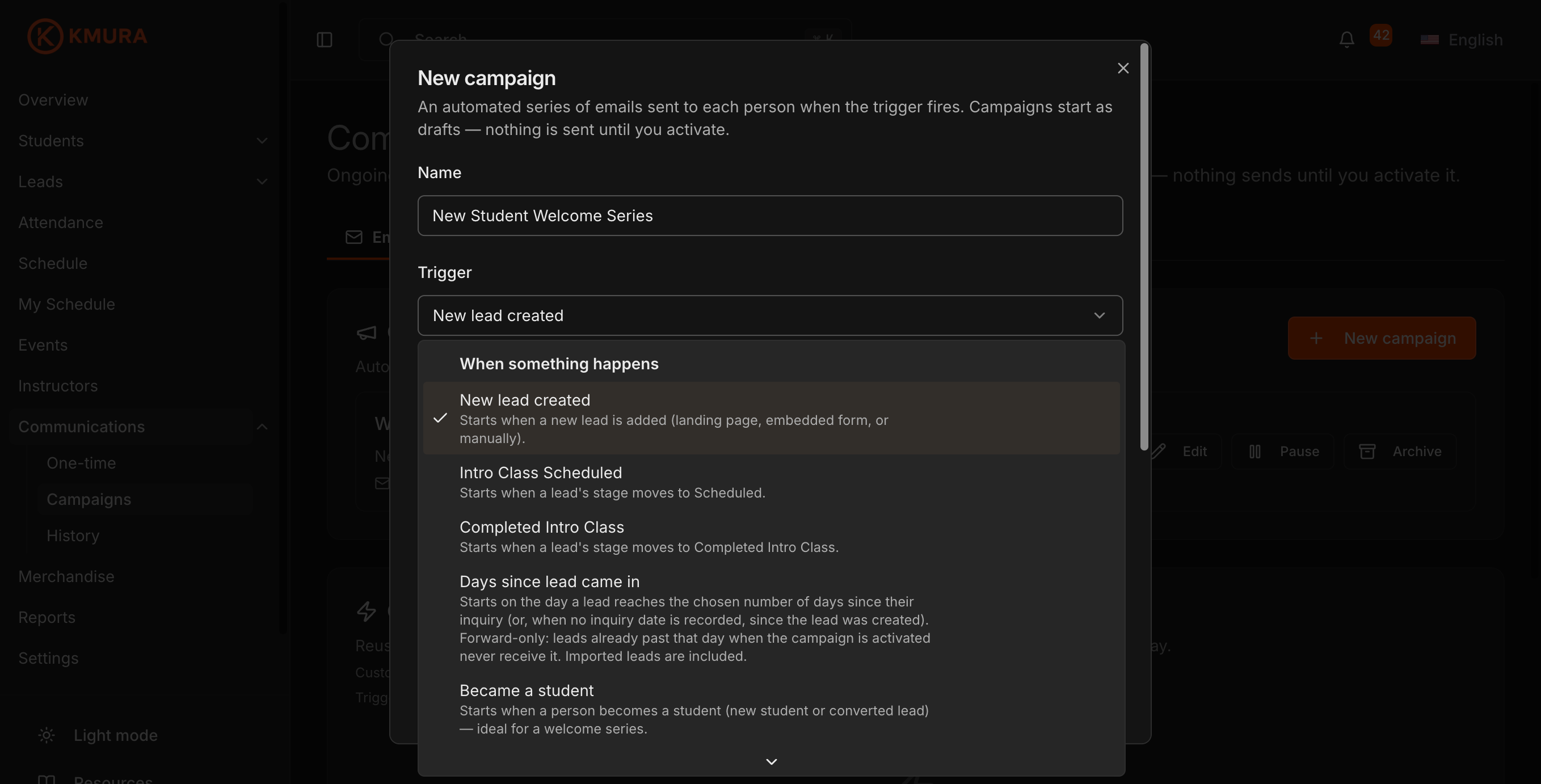
Click New campaign, give it a Name, and open the Trigger dropdown.
Under When something happens, choose the event that starts the series: New lead created, Intro Class Scheduled, Completed Intro Class, Days since lead came in, Became a student, Student birthday, Belt or stripe promotion, or Class anniversary.
For lead triggers, leave Stop this series if the lead becomes a student checked so converted leads do not keep getting sales emails.
Note
Time-based triggers are forward-only. Someone already past the day or milestone when you activate never receives the series.
Write the message series
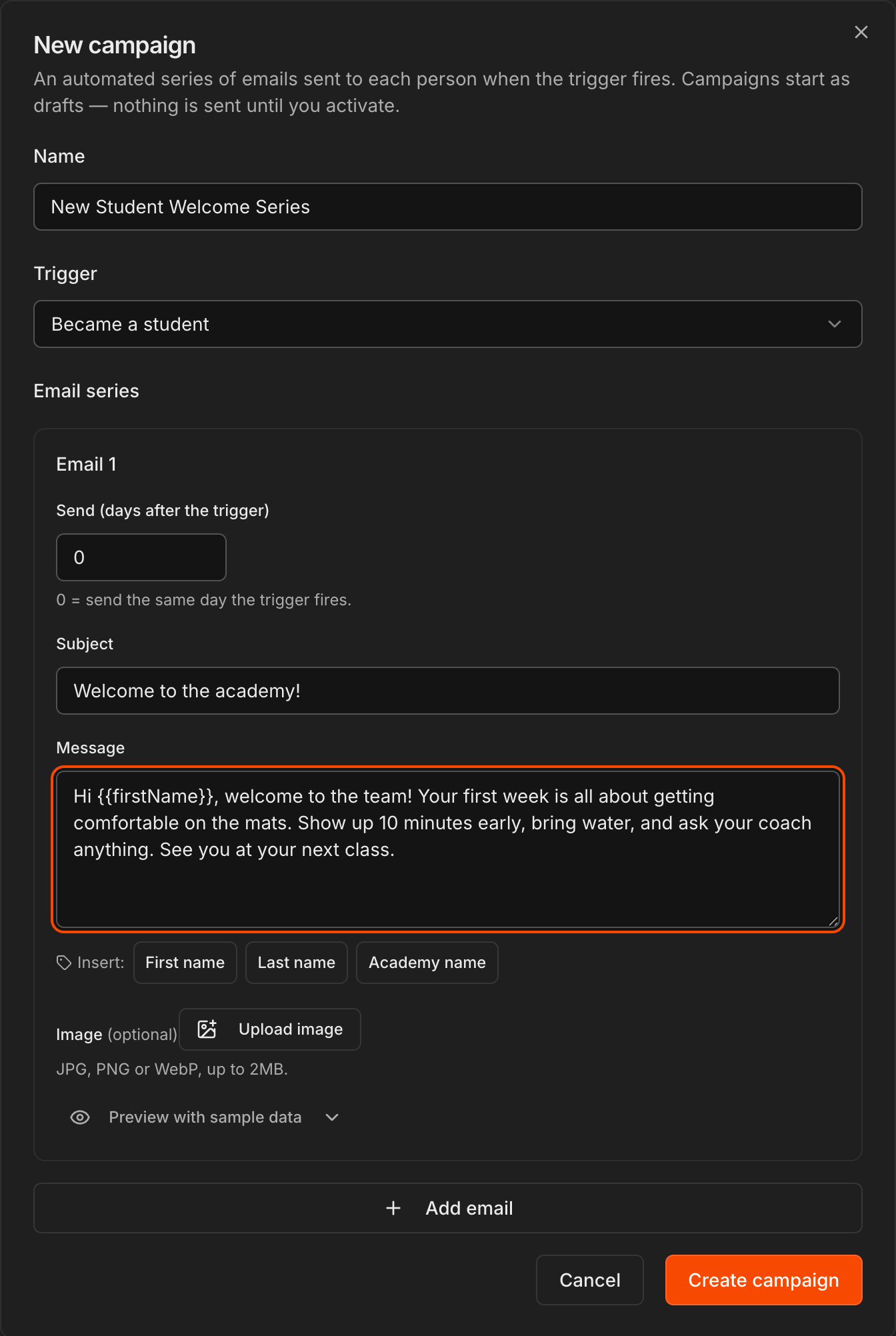
Under Email series, set Send (days after the trigger) for the first message. 0 sends the same day the trigger fires.
Enter a Subject and your Message. Use the Insert buttons to drop in First name, Last name, or Academy name, which Kmura fills in for each recipient.
Optionally upload an image (JPG, PNG, or WebP, up to 2MB).
Click Add email to add the next message in the series with its own day offset, subject, and text. Use the trash icon to remove one.
Tip
A welcome series that sends on day 0, day 3, and day 7 covers the window when new students decide whether the habit sticks.
Preview, save, and activate
Click Preview with sample data under any message to see it with a real name and your academy filled in.
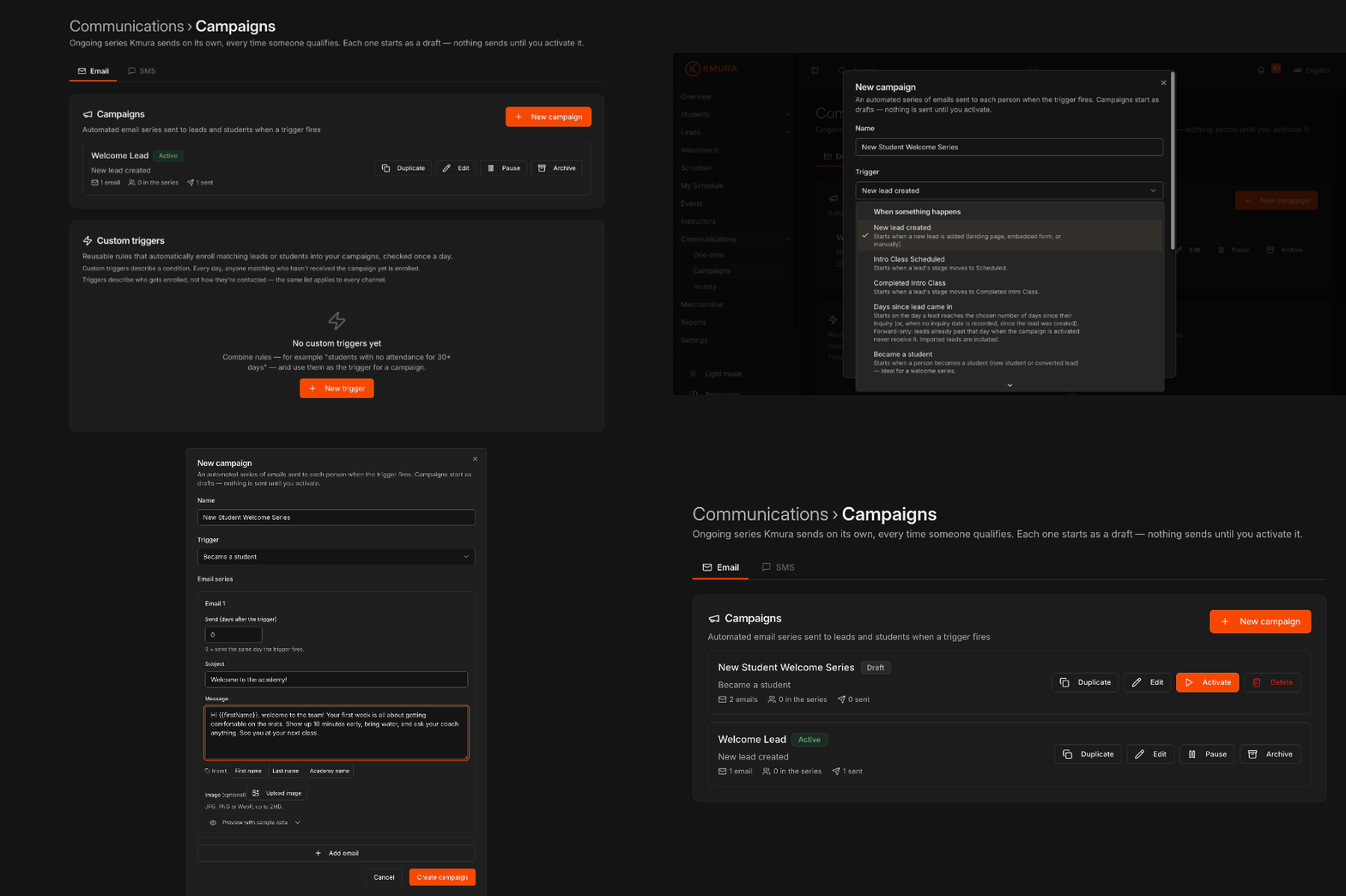
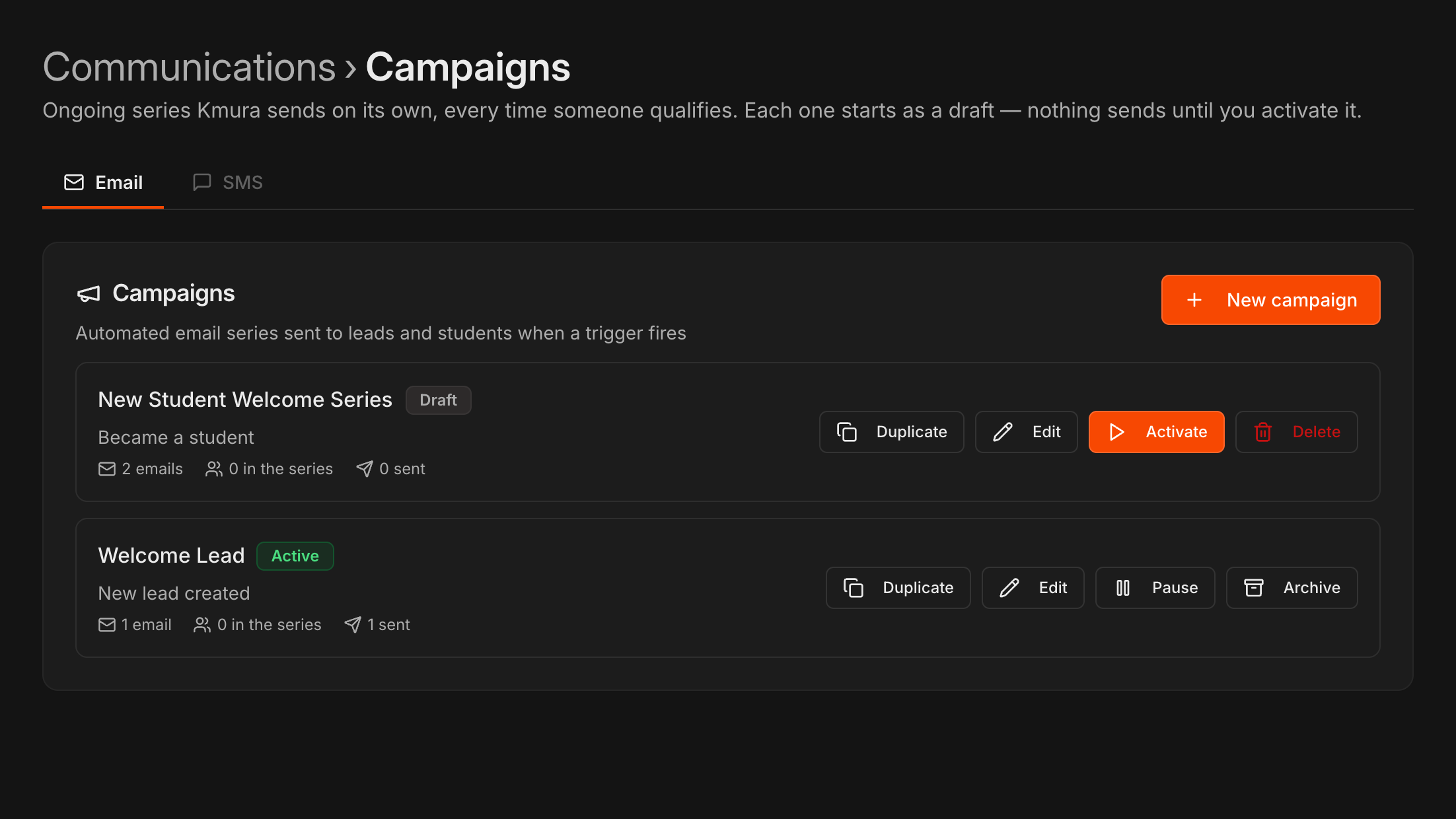
Click Create campaign. It appears in the Campaigns card as a Draft with Duplicate, Edit, Activate, and Delete buttons.
Click Activate and confirm. From then on Kmura sends automatically every time the trigger fires, until you pause or archive the campaign.
Each card shows how many messages are in the series, how many people are currently in it, and how many messages have been sent.
Build a custom trigger
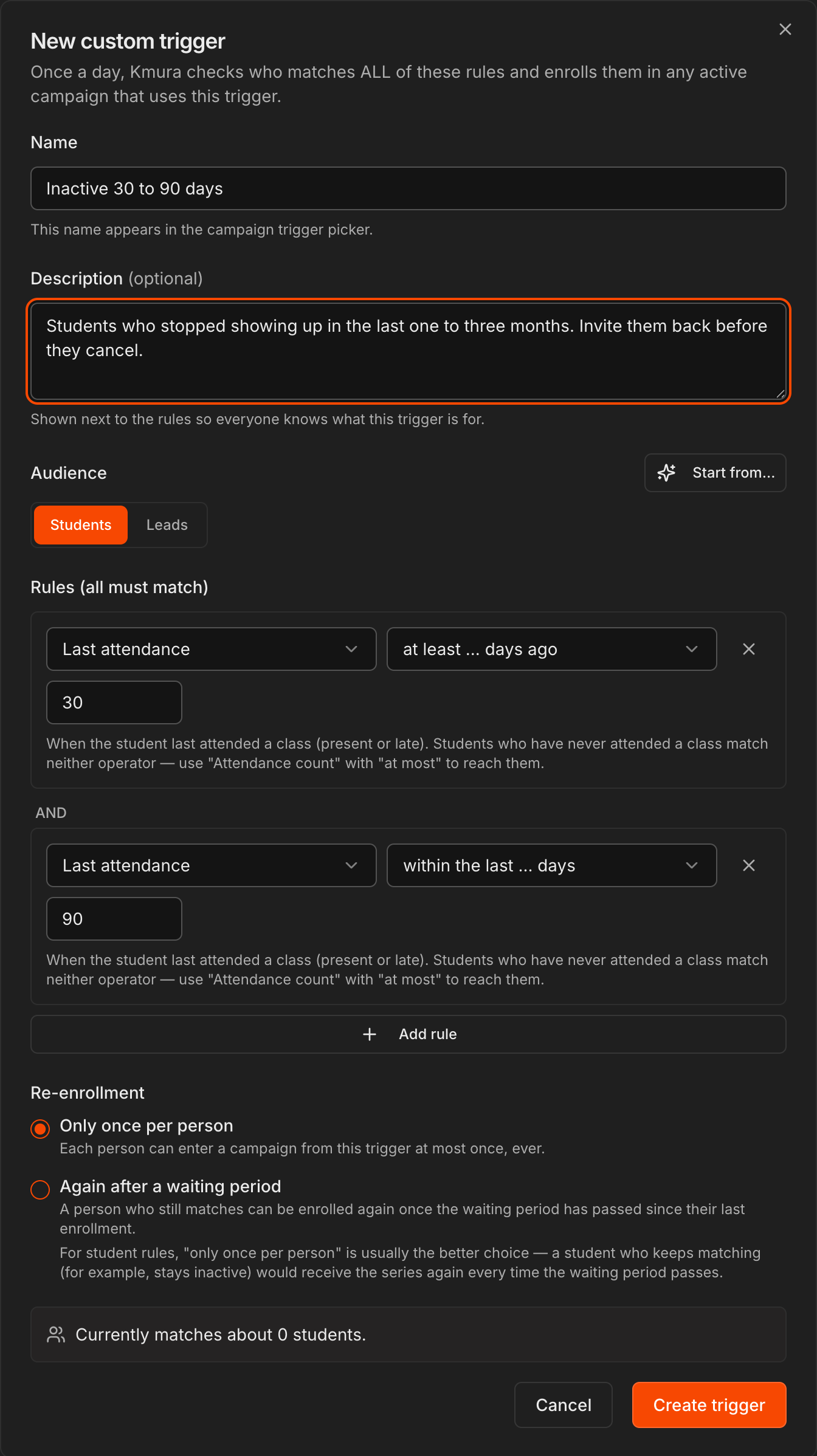
In the Custom triggers card, click New trigger. Give it a Name (this is what appears in the campaign trigger picker) and an optional Description.
Choose the Audience: Students or Leads. Student rules include Belt, Program, Last attendance, Join date, Last promotion, Attendance count, Age, Membership, and Membership plan. Lead rules include Pipeline stage, Time in stage, Source, Lead age, and Belt.
Add rules with Add rule. Every rule must match. The dialog shows how many people currently match as you build.
Under Re-enrollment, pick Only once per person or Again after a waiting period.
Click Create trigger. Kmura checks it once a day and enrolls anyone who matches and has not received the campaign yet.
Tip
Click **Start from...** for ready-made rule sets: **Win-back**, **Stuck lead**, **Promotion nudge**, and **New-member milestone**.
Note
For student rules, **Only once per person** is usually the right choice. Someone who stays inactive would otherwise re-enter the series every time the waiting period passes.
Use a custom trigger in a campaign
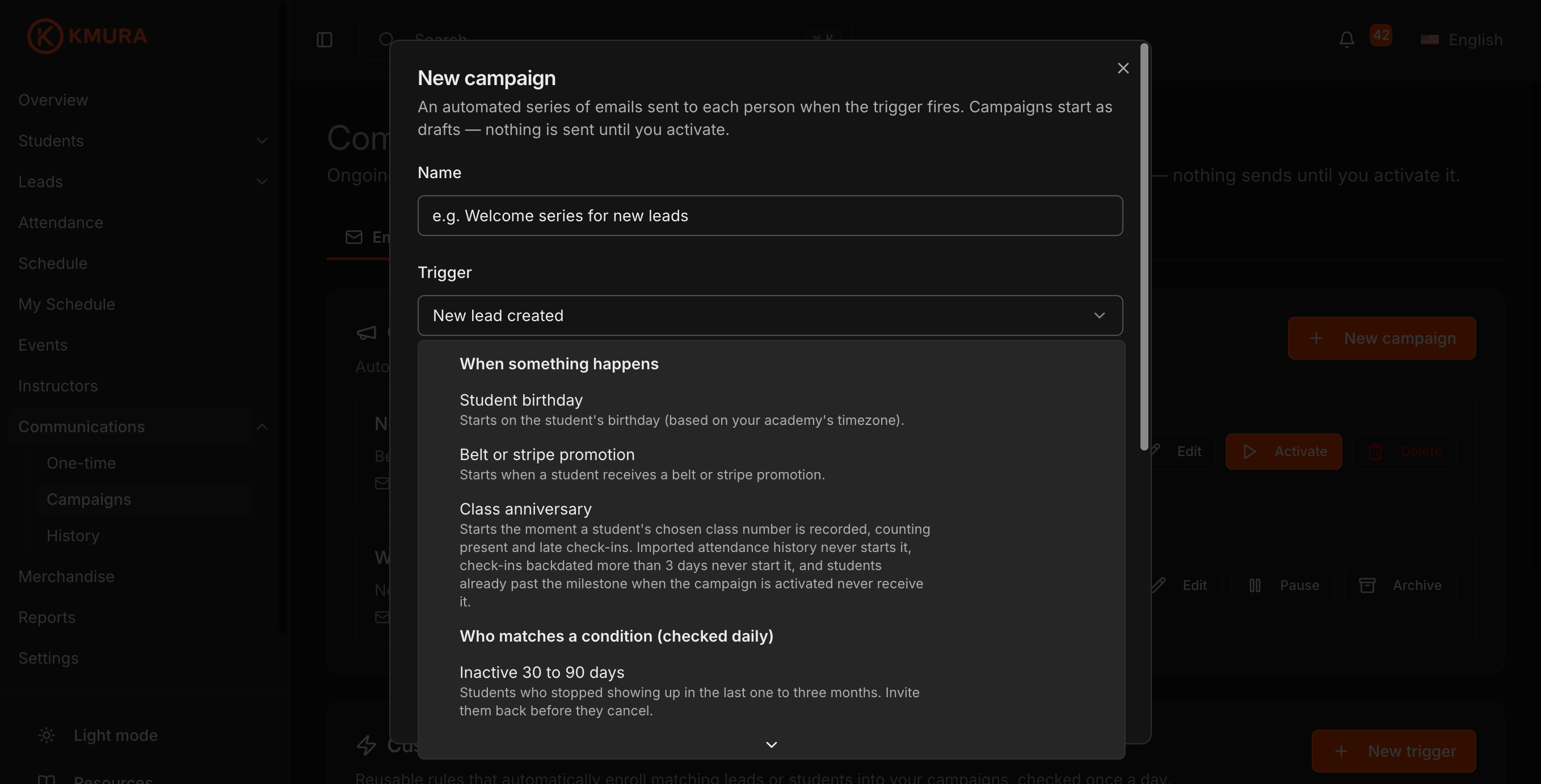
Click New campaign and open the Trigger dropdown. Your custom triggers appear under Who matches a condition (checked daily).
Select one, write the series, and activate it as in steps 3 and 4.
The trigger's card shows which campaigns use it. Triggers can be edited, archived, or deleted, but pause any active campaign that uses a trigger before you change it.
Manage running campaigns
Pause stops new sends without losing the series. Archive retires it. Duplicate copies it as a new draft, which is the fastest way to build the SMS version of an email campaign.
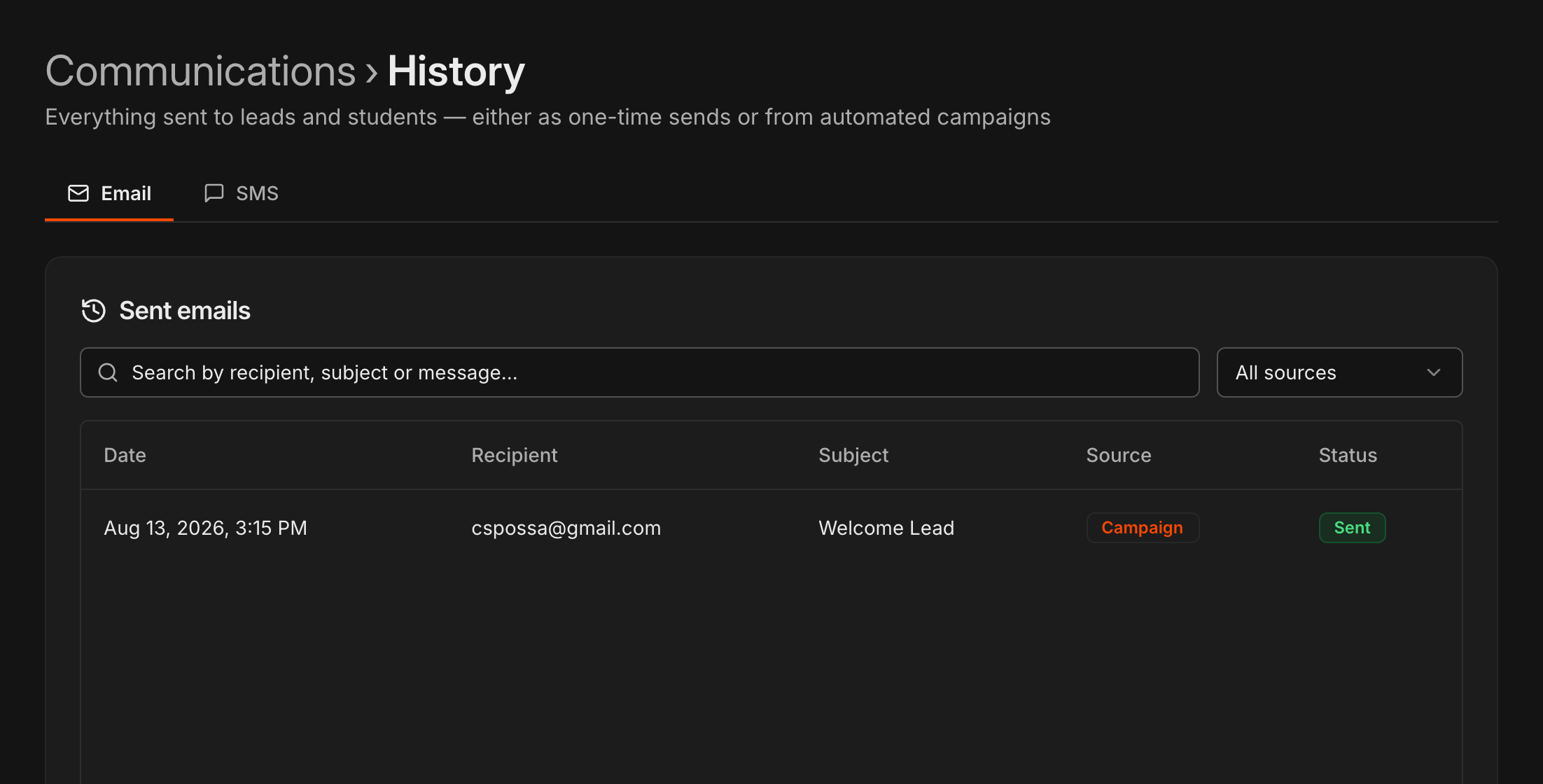
Go to Communications and open History to see every message a campaign has sent, tagged Campaign in the Source column, with its delivery Status.